

Category
Recommended Products
CI503P COLOR ANALYZER
CI550 COLOR ANALYZER
CL138 UV light meter
CI510 COLOR ANALYZER
CL503 illuminance colorimeter
CI300 Color Analyzer
CL300 illuminance colorimeter
CI820 SPECTRAL LUMINANCE COLORIMETER
CL320 UV Meter
CI350 LUMINANCE COLORIMETER
Contact Us
E-mail:info@huicolor.com
Tel:0086 755 2317 9385
Mobile:0086 135 0006 9487
Technical Articles
Basic knowledge and measurement methods of blue light hazards (BLH)
- Time:2025-10-14
- Visits:1
1 Basic Knowledge of Blue Light Hazards
The standard referenced is CIE S009 (Photobiological safety of lamps and lamp systems) and GB/T 20145. Blue light hazard refers to the potential harm to the human eye caused by blue light irradiance reaching RG2 or RG3 levels as specified by the standard, occurring over a short period or instantaneously.
Blue light is abundantly present in computer monitors, fluorescent lamps, smart phones, digital devices, displays, and LEDs. The blue light within this wavelength can increase the toxin levels in the macular region of the eyes, posing a serious threat to our eye health.
Blue light is ubiquitous in daily life, but the primary source of harmful blue light exposure comes from LED liquid crystal screens. As the main entertainment medium in living rooms, LED LCD TVs are widely used by most households for watching shows before bedtime. Many people even turn off lights while watching TV, and factors like screen flickering further contribute to the damage caused by harmful blue light to the eyes. Since the harm of harmful blue light to vision accumulates over time, it is essential to pay sufficient attention to the impact of TV blue light on eye health, especially for children and adolescents.
The lighting sources for large outdoor projects such as football fields are typically of very high brightness, requiring thorough testing and verification of blue light hazards during project acceptance.
The hazard of blue light is typically assessed using blue light weighted luminance, as shown in the formula in Figure 1 and 2. The allowable deviation of weighted irradiance and weighted radiance is shown in Figures 3 and 4.
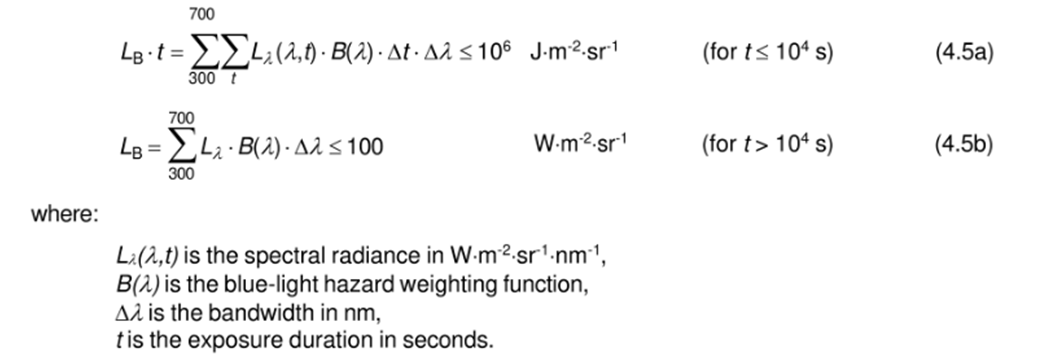
Figure 1
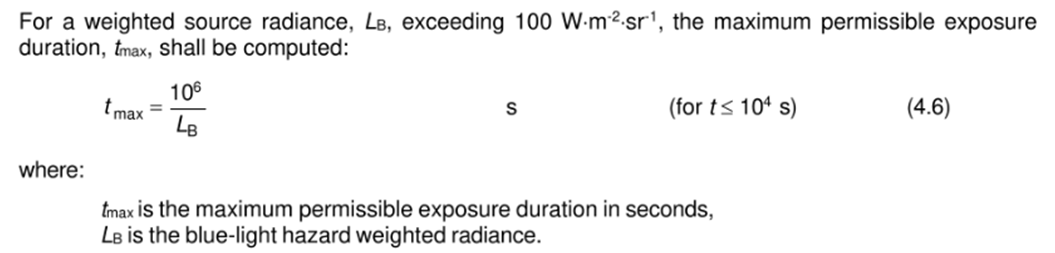
Figure 2
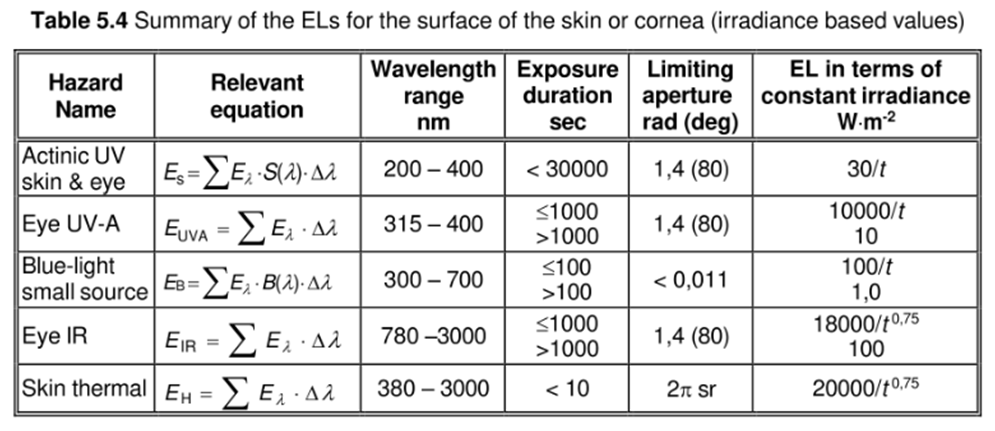
Figure 3
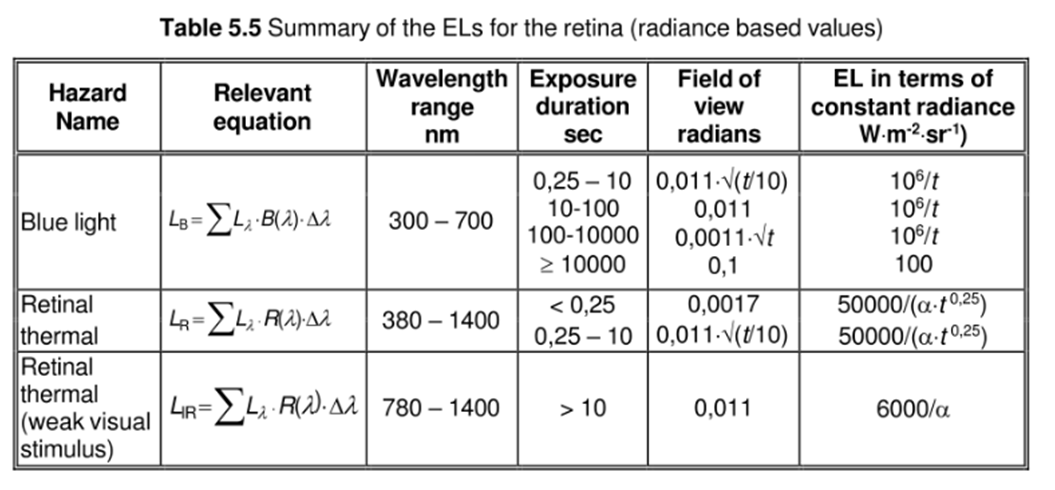
Figure 4
According to GB/T 20145, the hazards of blue light retina can be divided into the following categories, as shown in Figure 5.
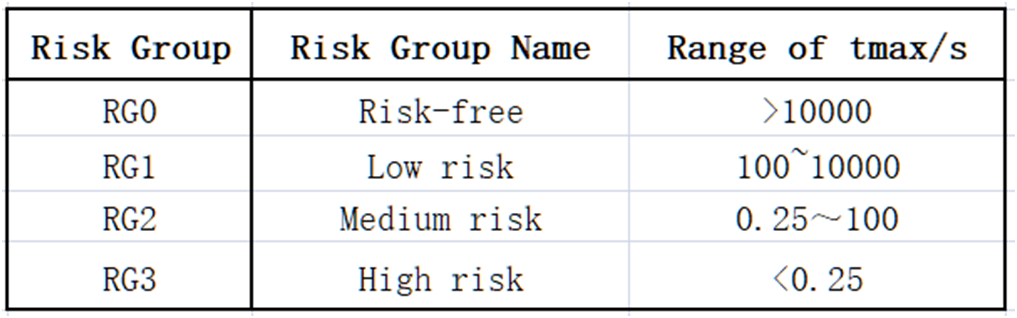
Figure 5
2 Measurement methods for blue light hazards
There are strict testing procedures and methods for the hazards of blue light. Most users directly send the light source to qualified metrology research for radiance spectrum data collection, then calculate the weighted radiance, and finally obtain the blue light hazard level.
In fact, there is another convenient testing method to directly use a high-precision spectral radiance meter that can measure the harm of blue light radiance, such as the CI820S spectral radiance meter shown in Figure 6.
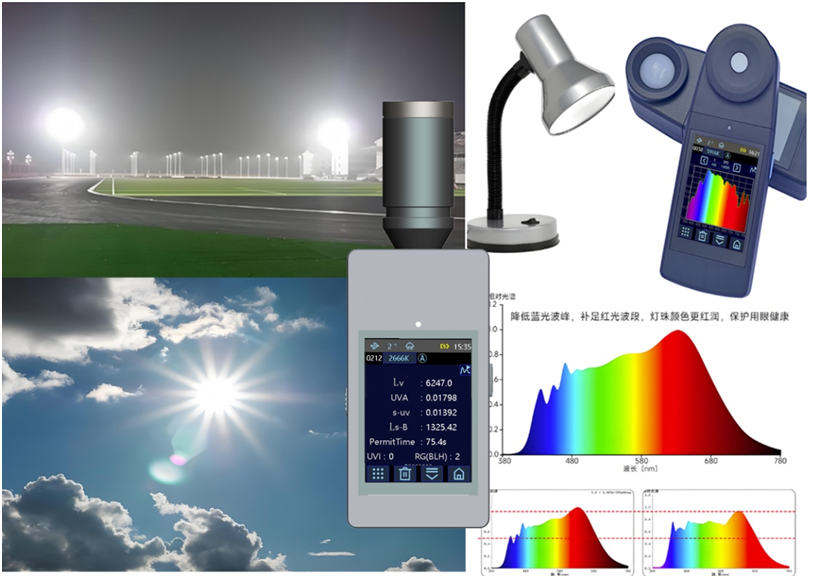
Figure 6
3 Overview of CI820S SPECTRAL LUMINANCE COLORIMETER
The CI820S spectroradiometer is a portable luminance colorimeter. The instrument adopts high-precision concave grating as the spectral component, which can collect the radiance spectrum of the light source in the wavelength range of 350-800nm, output the radiance spectrum at 1nm intervals, measure at a 0.5 ° angle, with a minimum measurement area of Φ 22mm and a measurement range of up to 200000 cd/㎡. With the optional high lens, the maximum luminance can reach 3 million cd/㎡. The instrument is equipped with a 2.8-inch TFT capacitive touch screen, 3000mAh lithium-ion battery, Bluetooth/WIFI multifunctional chip, and large capacity storage.
The instrument can not only measure technical parameters such as radiance spectrum, luminance, color temperature, color rendering index, chromaticity coordinates, dominant wavelength, peak wavelength, etc; It can also easily measure parameters such as blue light weighted radiance, blue light hazard level, and ultraviolet UVI, with good consistency with data from metrology institutes.
Instrument configuration includes multiple measurement modes such as single measurement, average measurement, continuous measurement, flash measurement, and flash frequency; Easy to operate, precise and stable measurement.
4 Method for Testing Blue Light Hazards with CI820S
Check the size of the light source. If the diameter of the light emitting surface of the light source is greater than 2.2mm, CI820S spectral luminance colorimeter can be used for hazard detection. The operation method is simple. The specific operation is as follows:
4.1 Turn on the instrument and move the switch to position 1.
4.2 Select "safety of lamps" for the instrument color index, as shown in Figure 7.
4.3 Preheat the test lighting source for half an hour to ensure that the luminescence performance of the test lighting source is completely stable.
4.4 The distance between the measuring port of the instrument and the emitting surface of the test lighting source should be 200mm, so that the axis of the measuring port of the instrument is as perpendicular as possible to the emitting surface. If necessary, the CI820S laser positioning assistance can be turned on to locate the testing point, as shown in Figure 8.
Press the CI820S MEAS button to complete the test, as shown in Figure 7 and 8.
4.6 Click on the spectral icon on the display screen or swipe the screen to quickly switch between various test charts. You can also use the free professional PC software HIQC to print test reports, as shown in Figure 9.
If the diameter of the light emitting surface of the light source is less than 2.2mm, CL800 spectrophotometer can be used for blue light irradiance hazard detection.
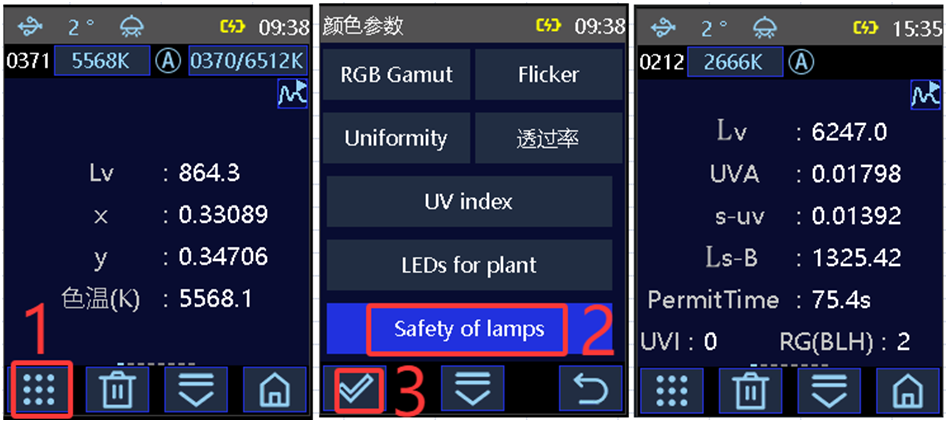
Figure 7
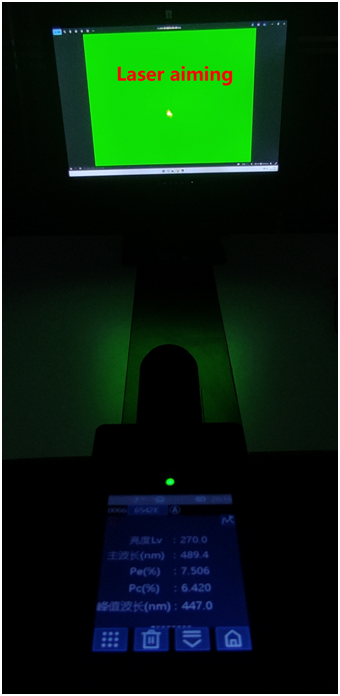
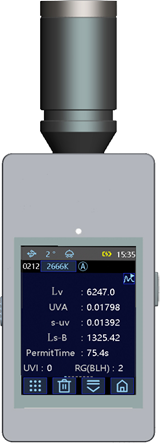
Figure 8
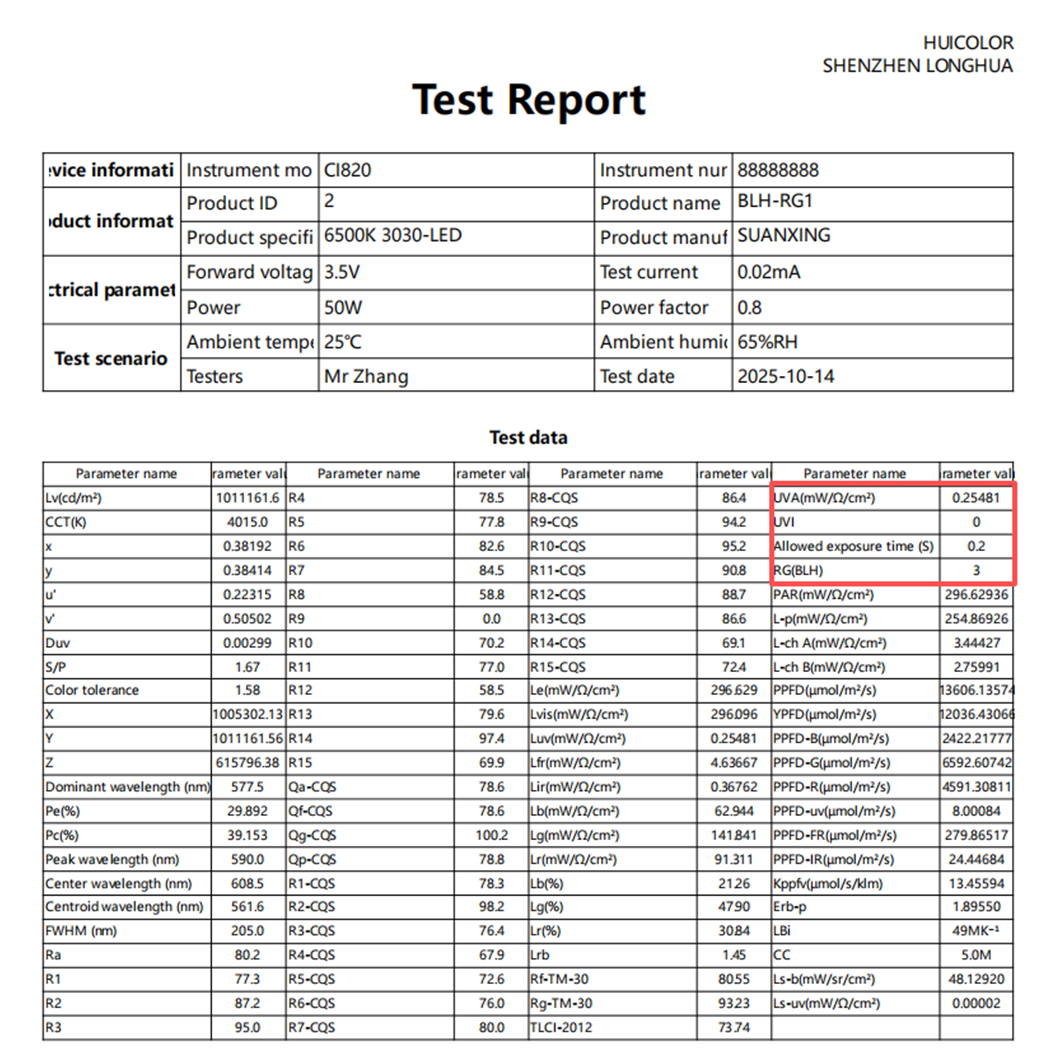
Figure 9
5 Accuracy of CI820S SPECTRAL LUMINANCE COLORIMETER in Testing Blue Light Hazards
The CI820S spectral luminance colorimeter tests the blue light hazard level of several lighting sources and compares it with the data reported by the metrology institute, as shown in Figures 10-13.
If the CI820S spectral luminance colorimeter can be tested in the same environment and synchronously with the metrology institute, the data will be closer, but it will not affect the evaluation results of the blue light hazard level.
If the hazard level of blue light is RG2/RG3, a CL800 spectrophotometer can be further used to test the distance of Eth.
If the diameter of the light-emitting surface of the light source is less than 2.2mm, a CL800 spectrophotometer can be used to test the hazard level of blue light irradiance.
In addition to testing the hazards of blue light radiance, CI820S can also test the UV index UVI and UV weighted radiance, providing a more comprehensive evaluation.
For more details, please consult the HUICOLOR's technical support.
Note: 1mW/sr/cm ²=10W/sr/m ².
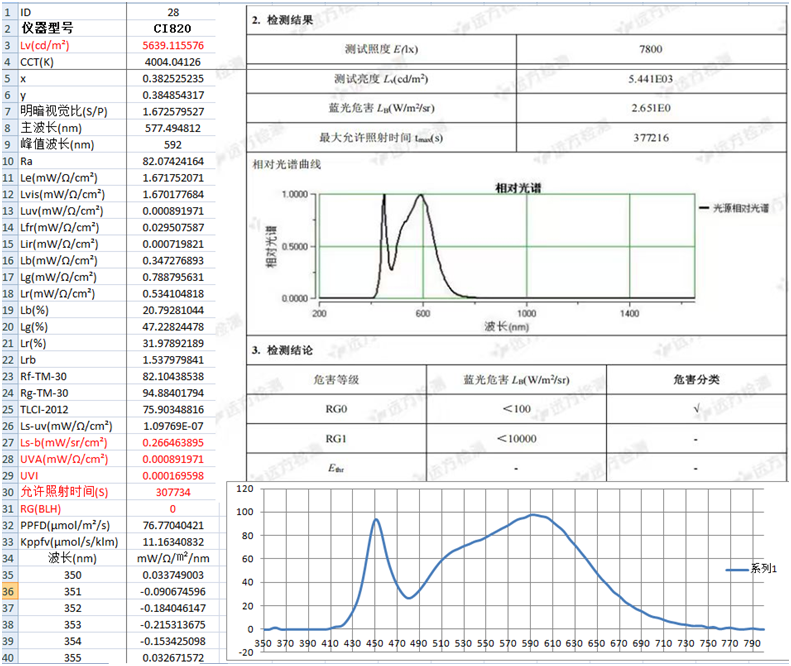
Figure 10<!--[endif]-->
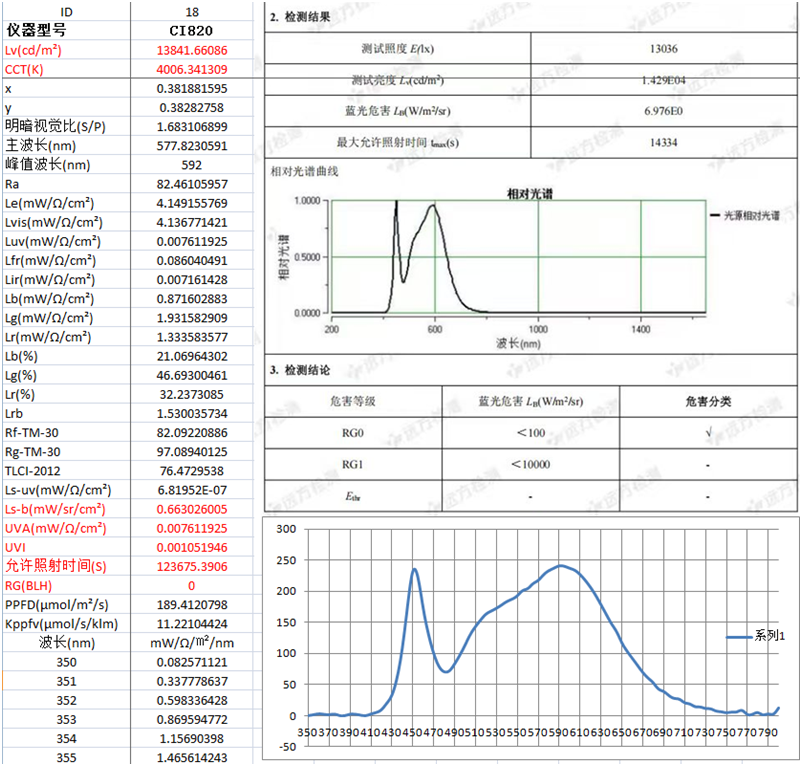
Figure 11
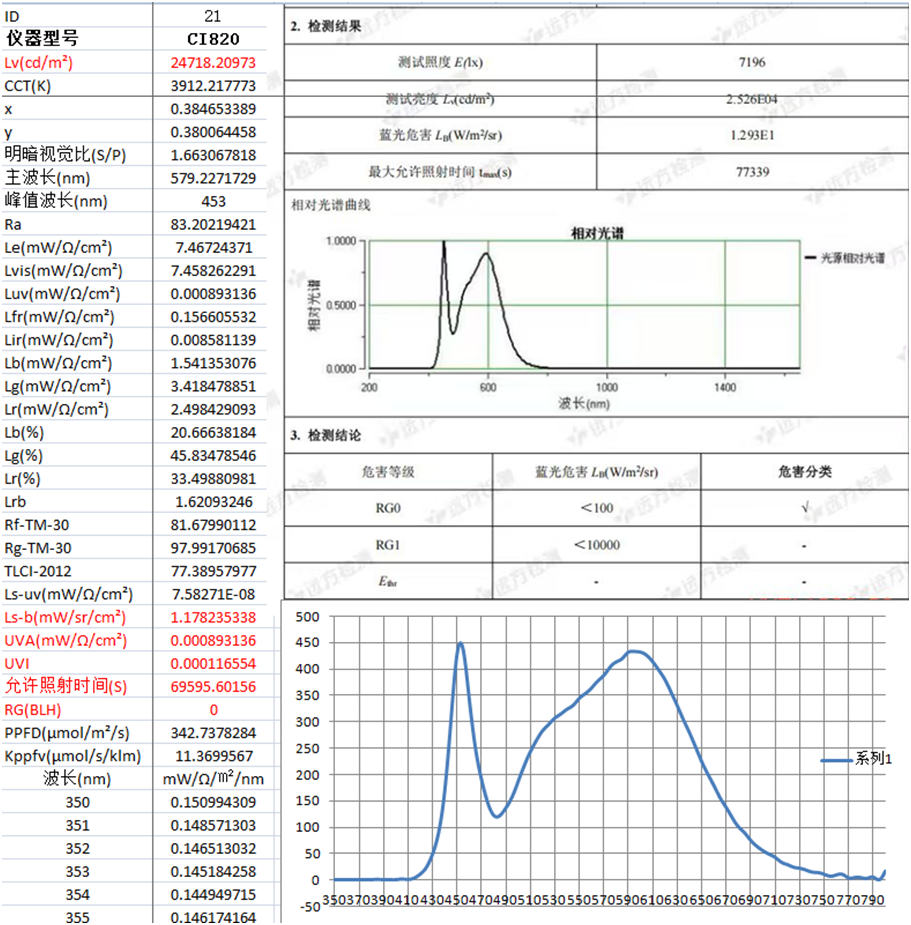
Figure 12