
Category
Recommended Products
CI503P COLOR ANALYZER
CI550 COLOR ANALYZER
CL138 UV light meter
CI510 COLOR ANALYZER
CL503 illuminance colorimeter
CI300 Color Analyzer
CL300 illuminance colorimeter
CI820 SPECTRAL LUMINANCE COLORIMETER
CL320 UV Meter
CI350 LUMINANCE COLORIMETER
Contact Us
E-mail:info@huicolor.com
Tel:0086 755 2317 9385
Mobile:0086 135 0006 9487
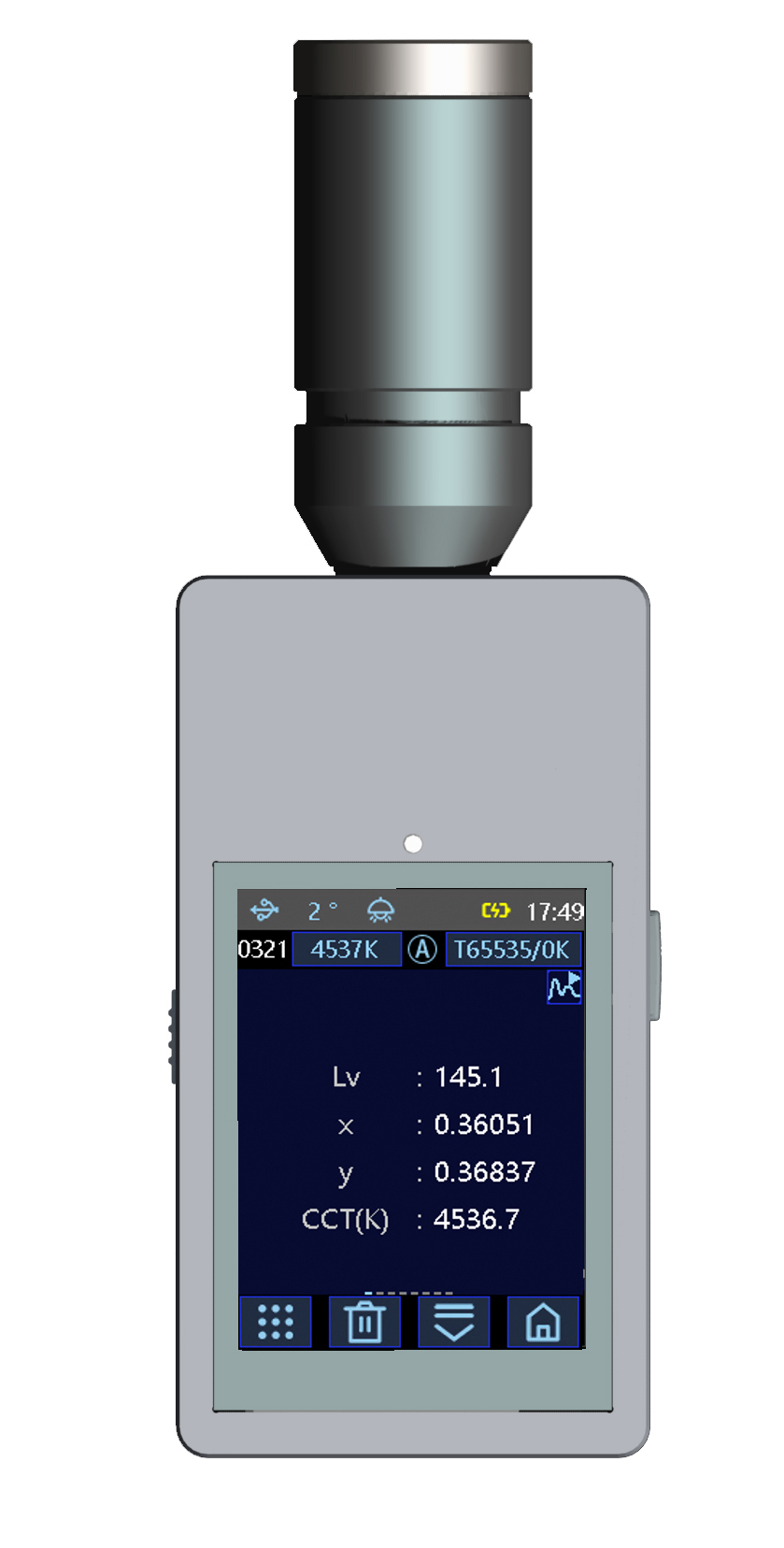
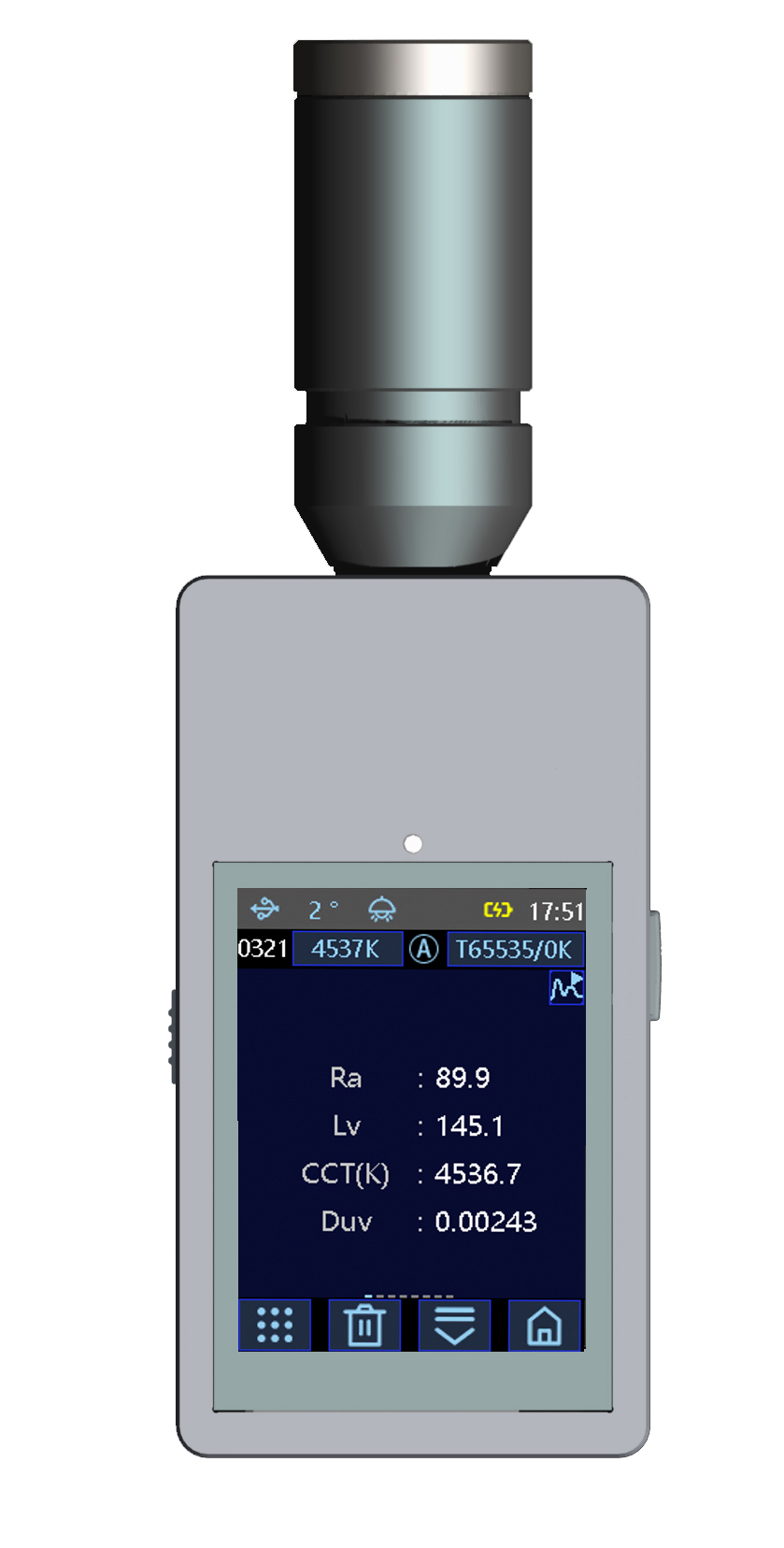
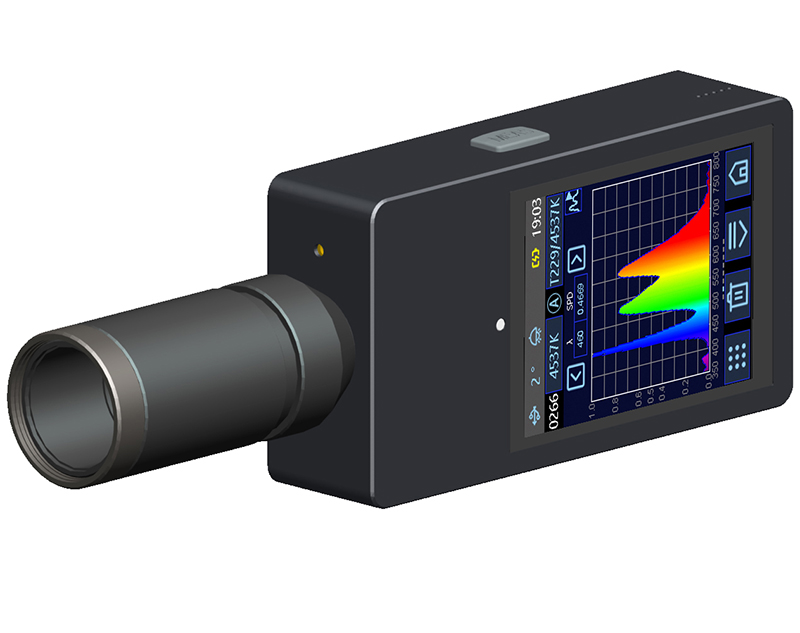
CI820 SPECTRAL LUMINANCE COLORIMETER
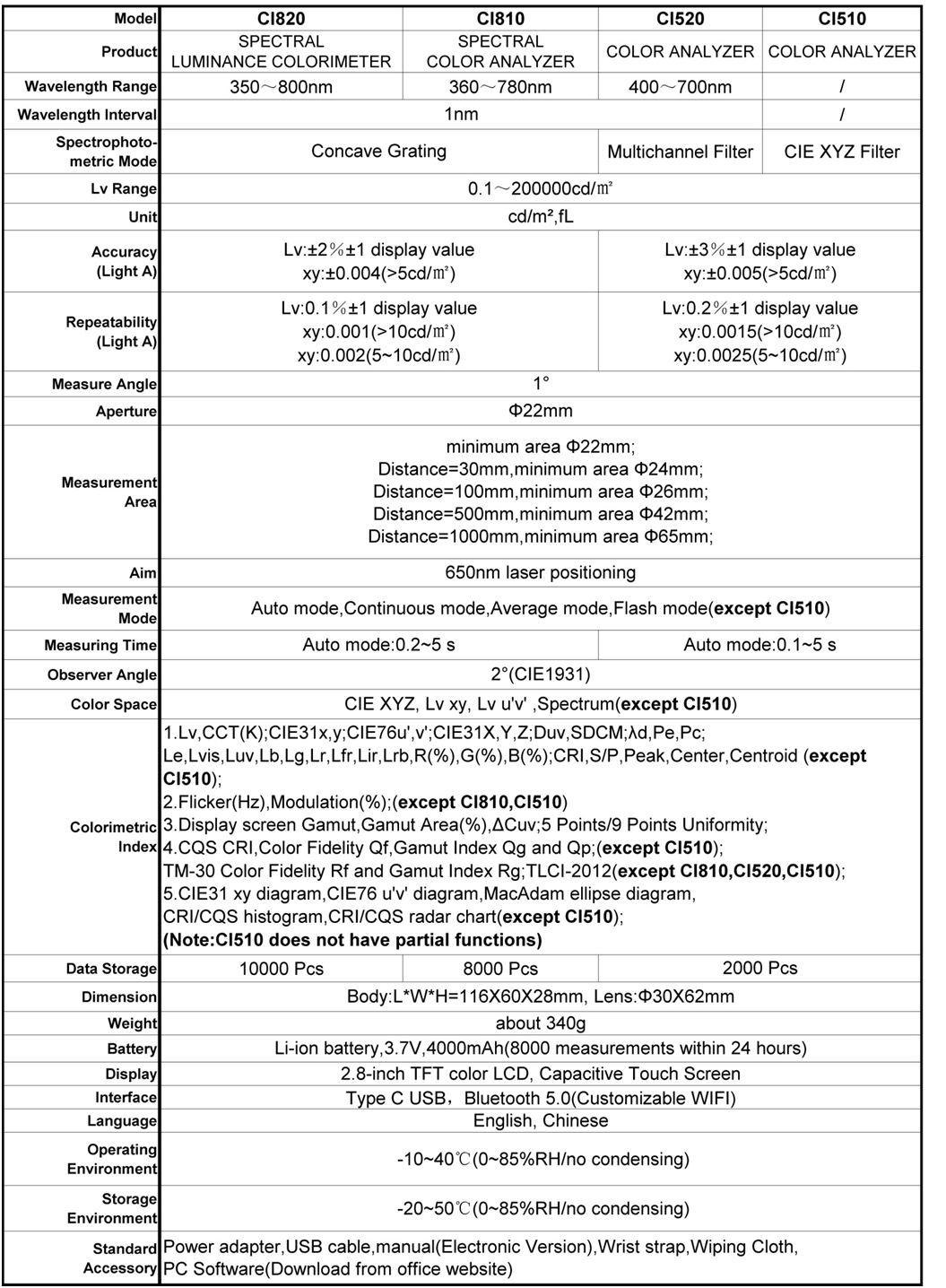
☆ Wavelength Range:350~800nm;
☆ Wavelength Interval:1nm;
☆ Spectrophotometric Mode:Concave Grating
☆ Lv Range:0.1~200000 cd/㎡;
☆ Aperture:Ev: Φ22mm(receiving angle 1°);
☆ Measurement Mode: Auto mode,Flash mode,Flicker mode, Continuous mode, Average mode ;
☆ Display: 2.8-inch TFT color LCD, Capacitive Touch Screen;
☆ Battery: Li-ion battery,3.7V,3000mAh(8000 measurements within 24 hours);
☆ Data Port: Type C USB,Bluetooth 5.0(Customizable WIFI);
☆ Data Storage: Sample 10000 Pcs(Including reference CCT records(D65/A/C/5000K));
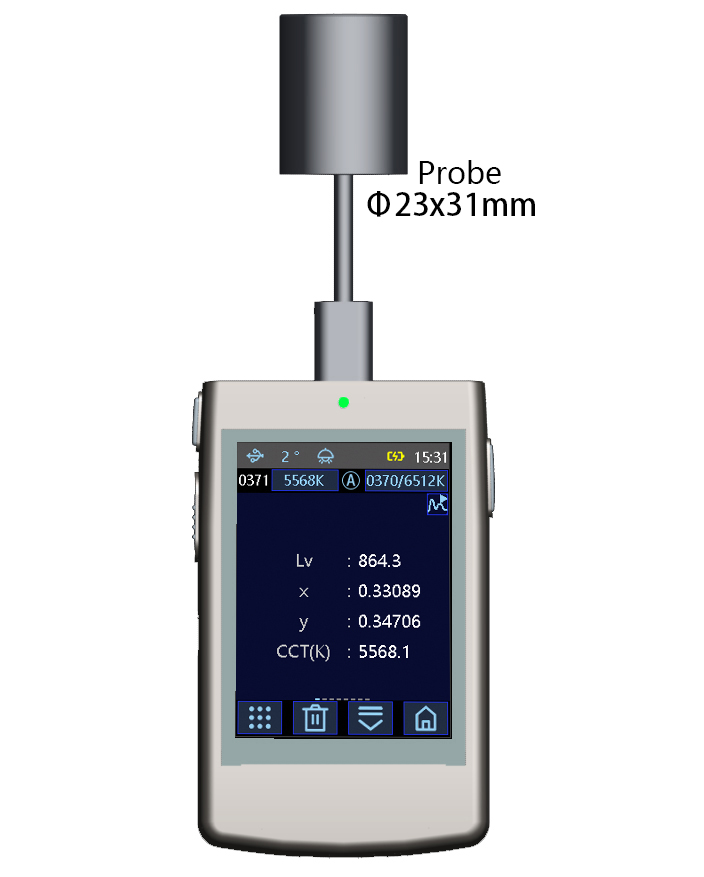
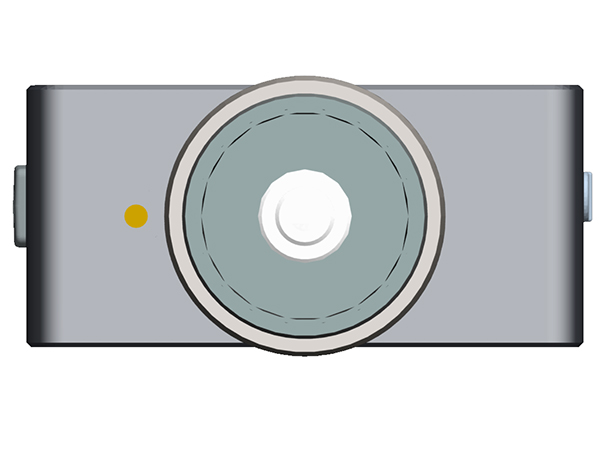
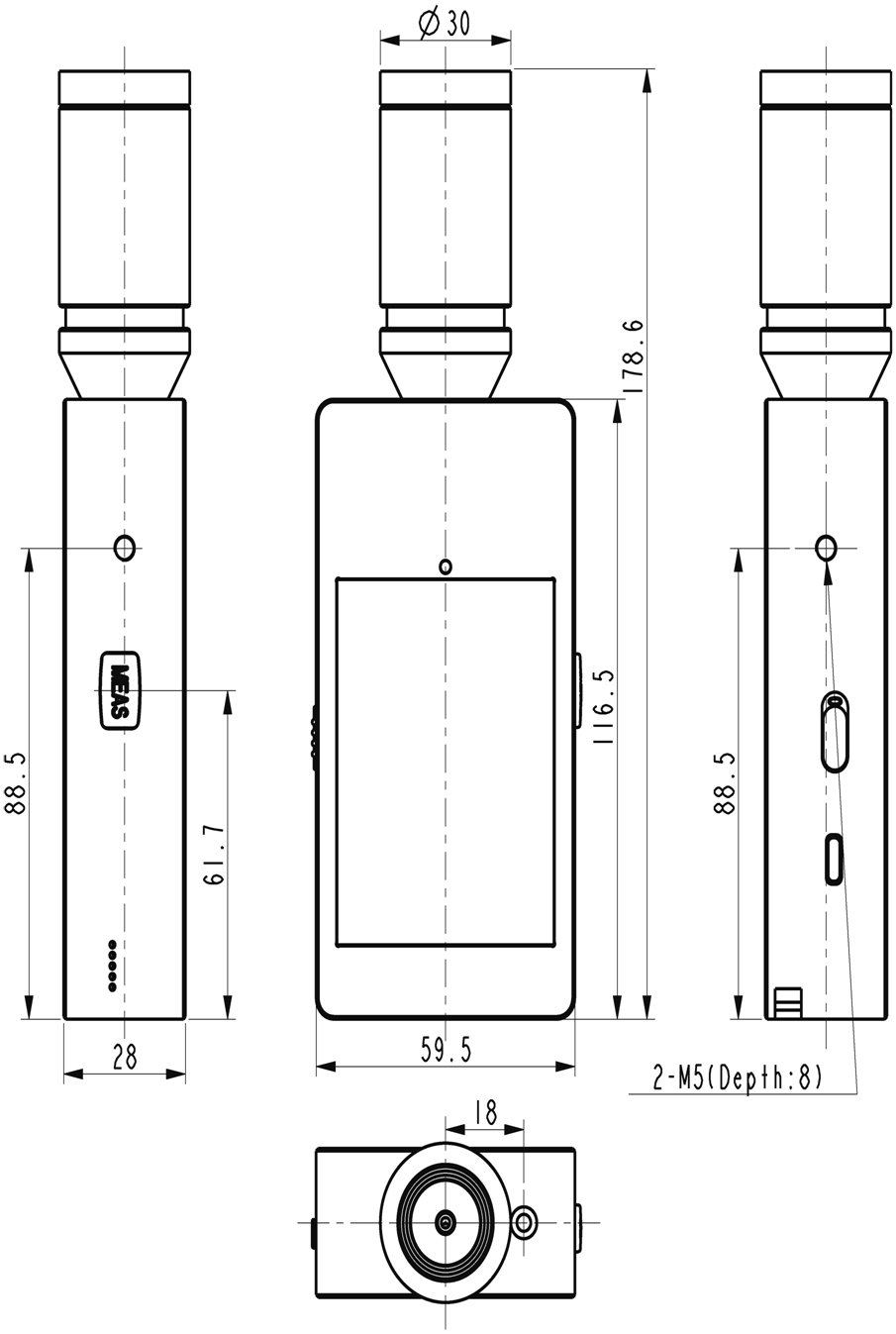
☆ Dimension: HOST:L*W*H=116X60X28mm; LENS:Φ30X62mm;
I Product Overview
CI820 spectroradiometer is a portable luminance colorimeter, independently developed by Huicolor Company. The colorimeter uses a high-precision concave grating as a spectroscopic component, which can collect the wavelength 350~800 nm, It outputs 1 nm interval radiance spectrum. The instrument has a measuring angle of 1 ° , a minimum measuring area of Φ22mm and a maximum measuring range of 200,000 cd/㎡.
The instrument is equipped with a 2.8-inch TFT capacitive touch screen, 4000 mAh lithium-ion battery, Bluetooth WIFI multifunctional chip, and large capacity memory.
The instrument can not only measure the radiance spectrum, Lv, color temperature, color rendering index, chromaticity coordinates, main wavelength, peak wavelength, you can also measure display gamut, panel uniformity, CQS, TM-30, TLCI-2012, flicker frequency and other parameters.
The instrument is equipped with single measurement, average measurement, continuous measurement, flash measurement, scintillation frequency and other measurement modes, easy to operate, accurate and stable measurement.
II Product Characteristics
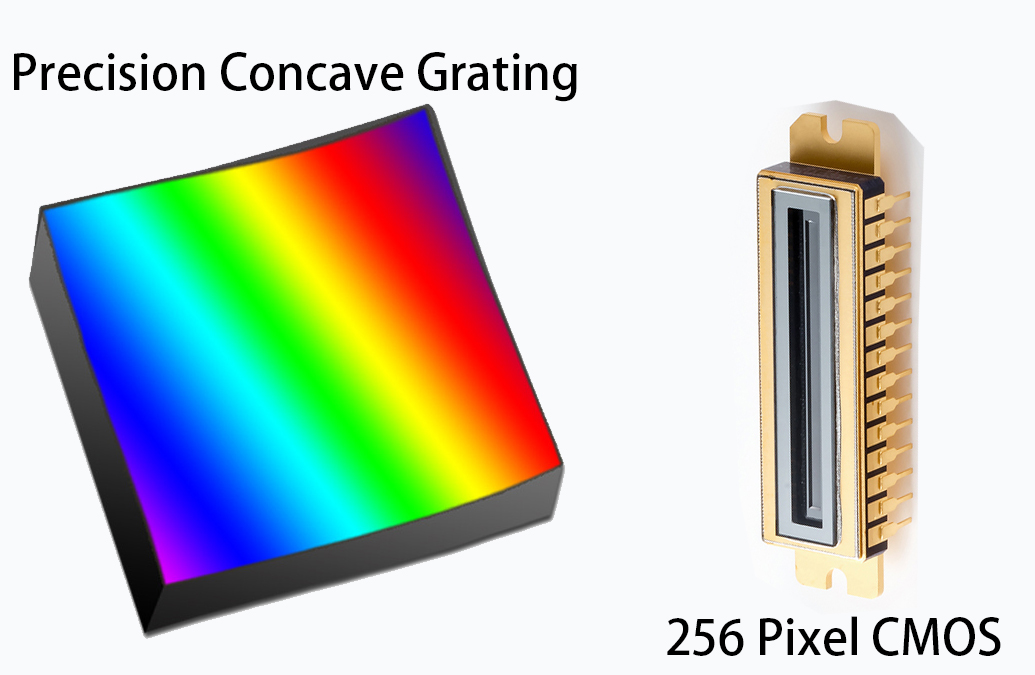
1. The instrument utilizes a high-precision concave grating as the spectral element and a 256-pixel CMOS as the detector. With a compact structure, it can measure the radiance spectrum of ambient light and flickering light sources within the wavelength range of 350-800nm, achieving high measurement accuracy, with a wavelength accuracy of 0.2 nm and a spectral output of 1nm. Compared with traditional XYZ filter color luminace meters, there is no adaptation error of CIE XYZ response function, and the measurement is accurate.
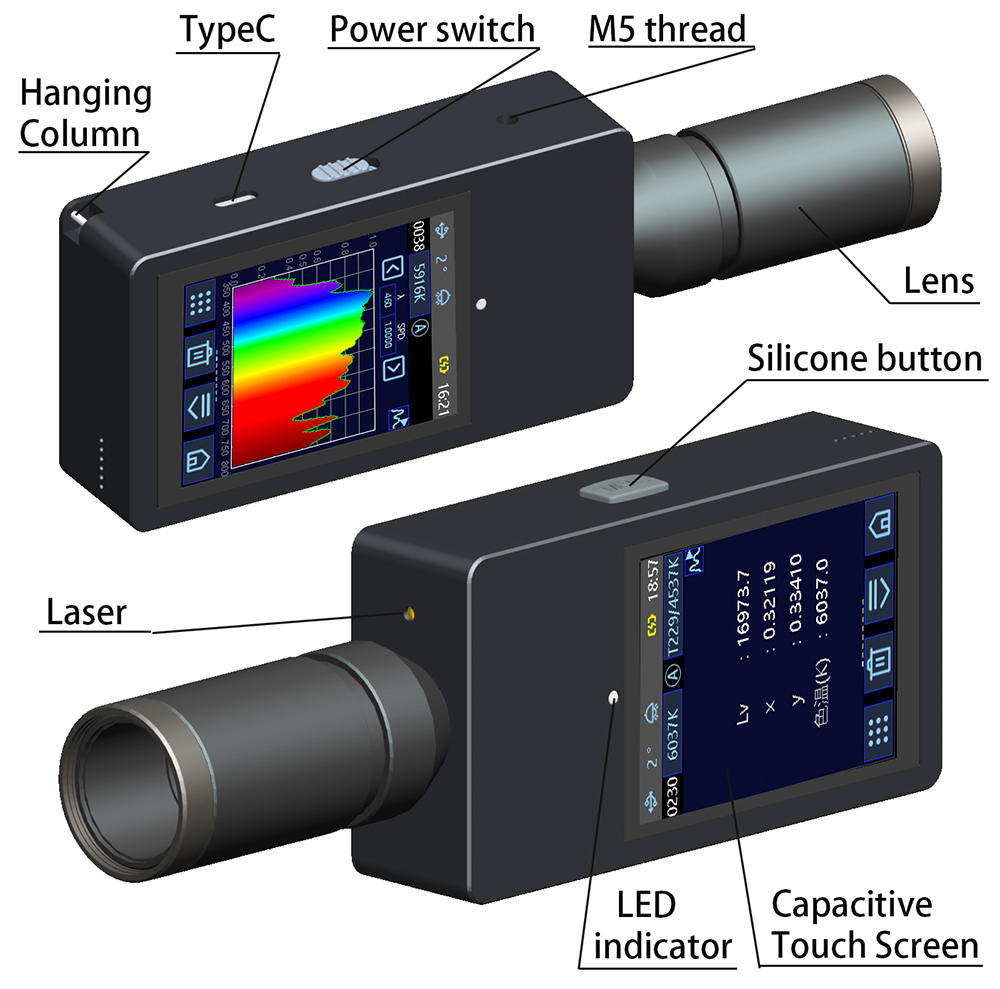
2. The instrument utilizes an industrial-grade MCU processor, equipped with a 2.8-inch TFT capacitive touch screen and up to 10,000 storage spaces. It features simple operation and stable performance.

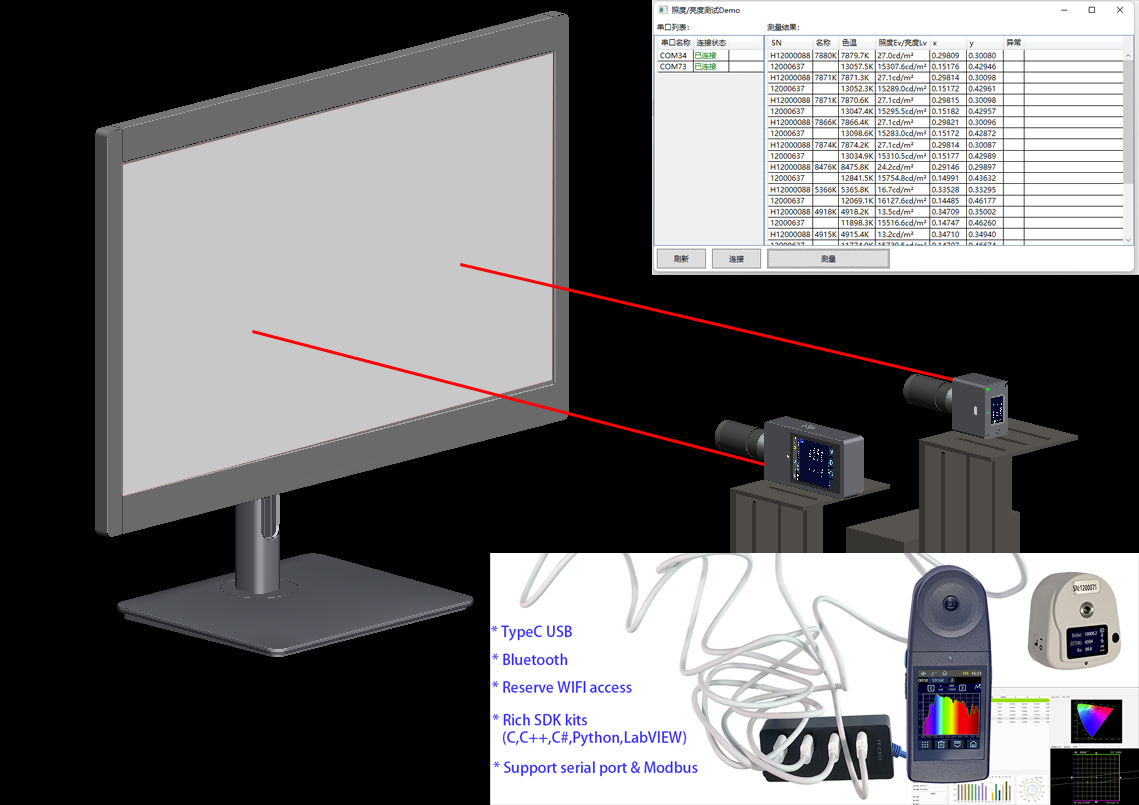
3. The instrument is equipped with a 4000 mAh lithium-ion battery, offering a long standby time. It is also equipped with Type-C and Bluetooth 5.0 interfaces, with a reserved WIFI interface. These rich expansion interfaces are highly suitable for secondary development and have a wide range of application scenarios.
4. A novel and fashionable appearance design based on ergonomics. The instrument has 650nm laser assisted measurement and positioning, which is convenient to use.
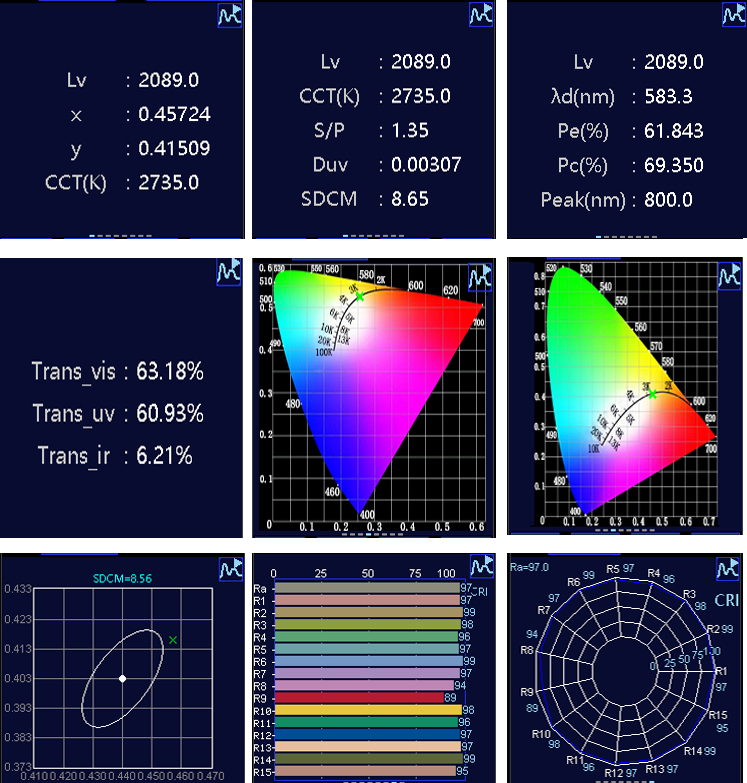
5. The instrument can test not only spectrum, Lv, color temperature, color rendering index, but also white balance, transmittance, display color gamut, uniformity, CQS, TM-30 index, flicker frequency and other parameters, with wide applications.
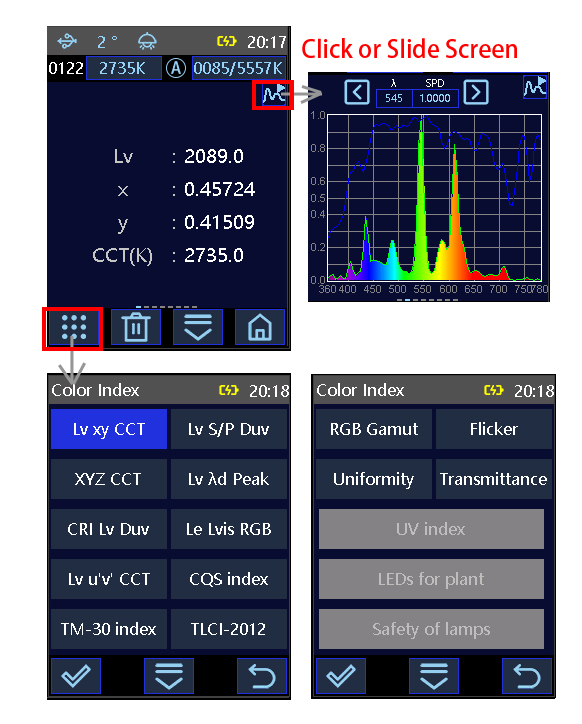
6. The instrument has multiple testing functions, with the functional modules being humanizedly distinguished, and the operation is simple, smooth and fluent.
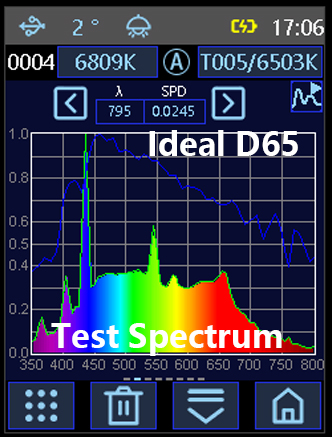
7. The instrument is built with the radiation spectra of standard illuminants such as D65, A, C, D50, and D75. In the comparison mode, it is very convenient to conduct spectral comparisons with the samples to be tested.
8. The measurement interface of the instrument can be locked to avoid misoperation.
9. The instrument test results have a good matching with the data of the high-quality luminance colorimeter recognized in the industry.
10. The instrument is widely applied in LED lighting industry, engineering lighting, display screens, TV multimedia, eye-protecting lamps, UV ultraviolet, and so on.
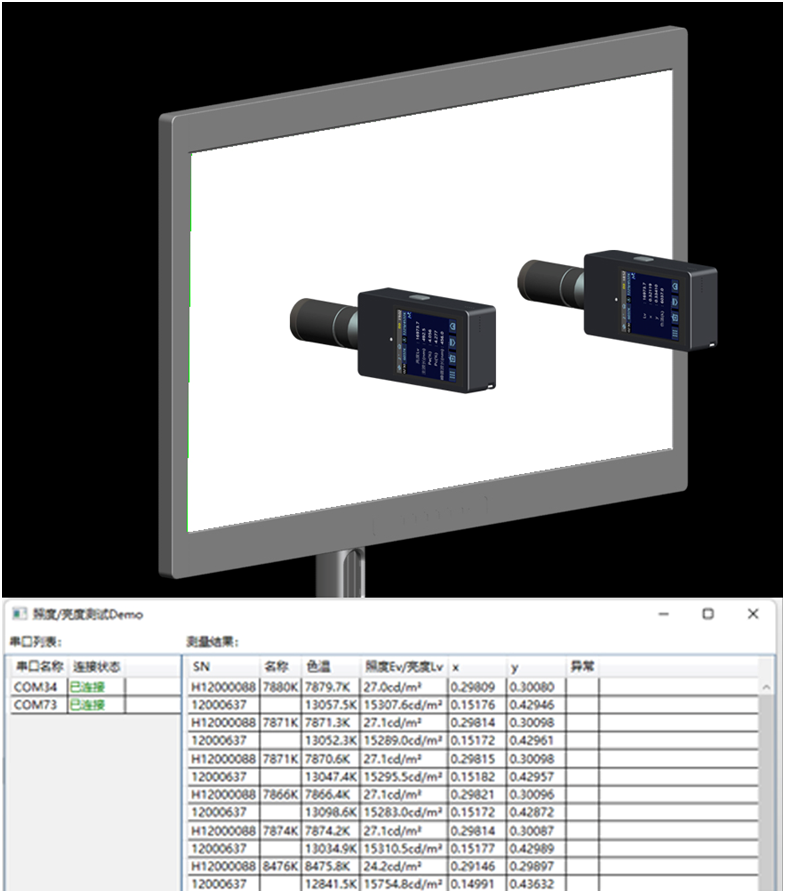
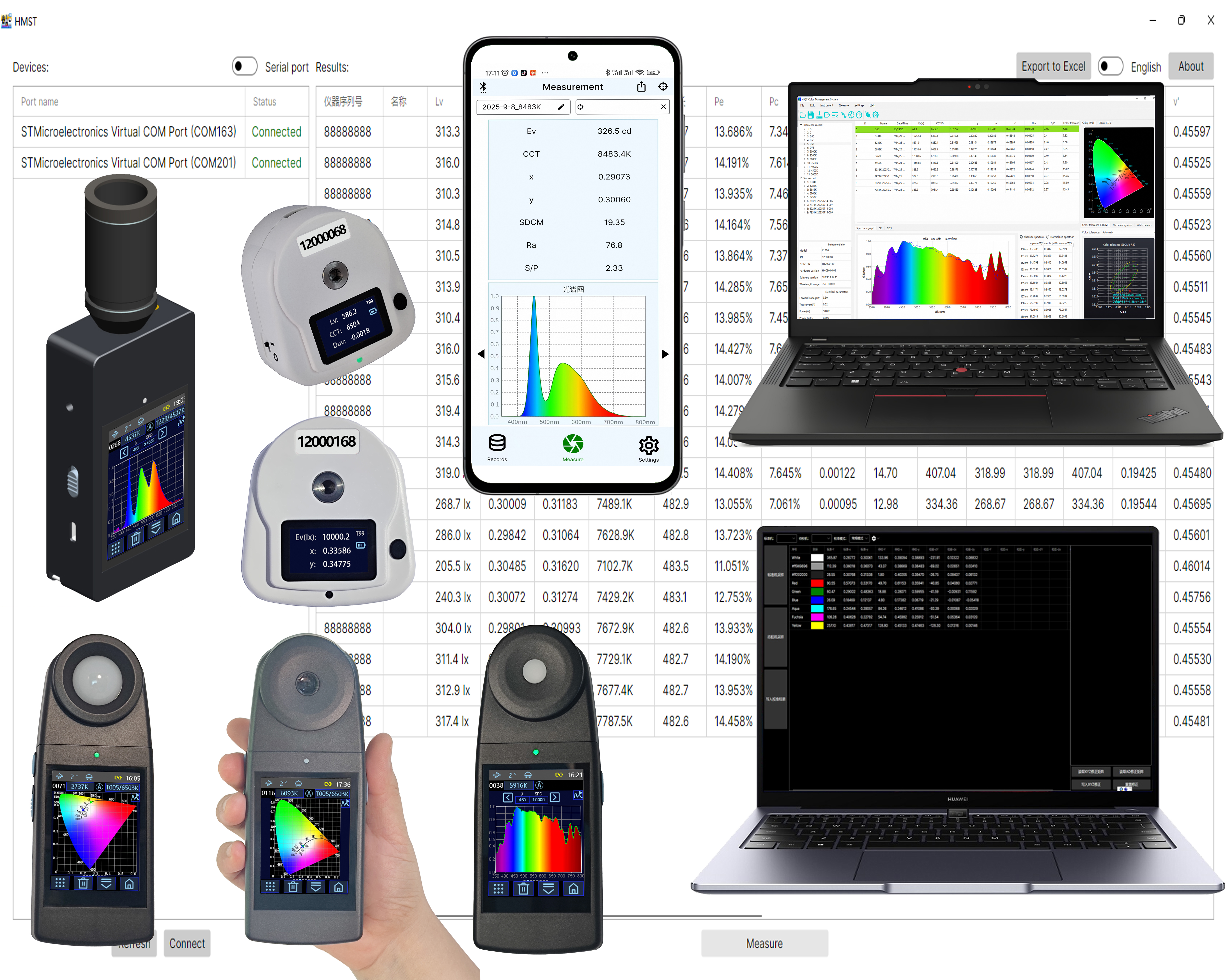
11. A computer can connect multiple instrument simultaneously via USB or Bluetooth for synchronous measurement and control.
12. The instrument has professional PC software, Rich SDK (support C # , C + + , Python, LabView and other platforms) .
III Applications
3.1 Lv and chromaticity coordinates measurement of Display panel/LCD
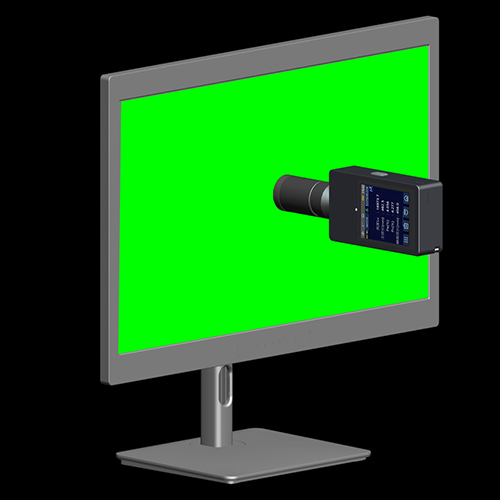
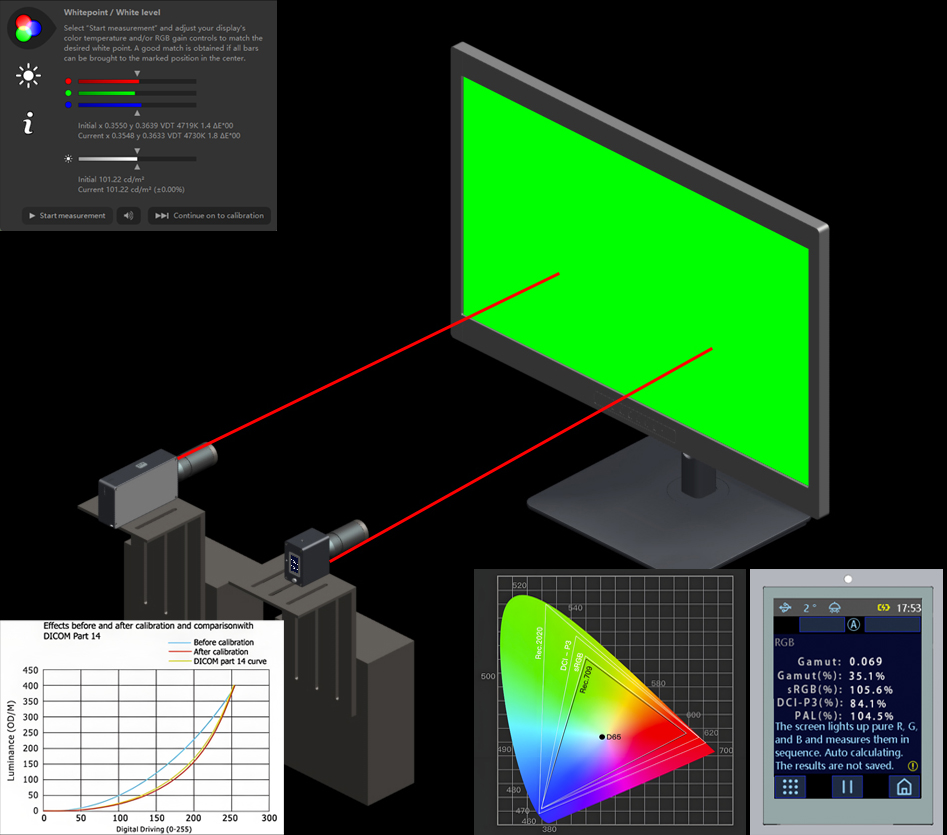
In a darkroom environment, the display/LCD panel is powered on and warmed up for half an hour. The CI820 is fixed on a mounting fixture, ensuring its optical axis is perpendicular to the display surface, with the probe positioned approximately 30mm from the display surface (or the measurement port is pressed tightly against the screen). The display panel is controlled to show different colors, and the CI820 captures the Lv, chromaticity coordinates, and spectral radiance of the screen at a 1° measurement angle. Based on this data, the display's color gamut and uniformity can be calculated, and functions such as GAMMA/DICOM/color calibration can be performed.
3.2 LED and solid-state lighting source spectrum, Lv, color temperature, color rendering index, uniformity, dominant wavelength, S/p, luminous flux and other parameters test
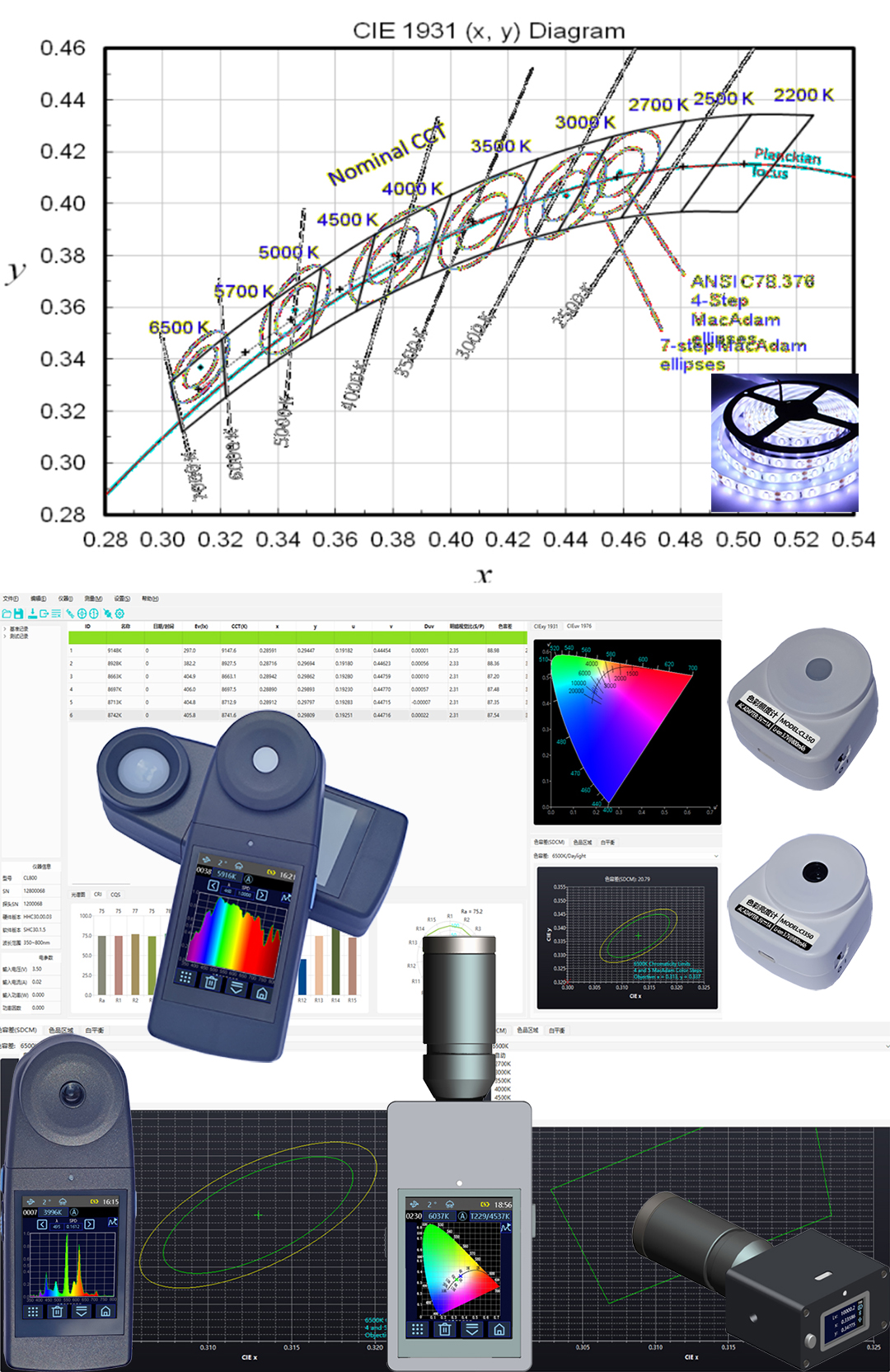
CI820 spectral luminance colorimeter stand-alone instrument can easily realize spectrum, Lv, color temperature, color rendering index, dominant wavelength, S/P, peak wavelength, plant lamp parameters, flash measurement, camera white balance and other parameters measurement.
The luminous flux can be measured by integrating sphere. With the help of professional HIQC software, the chromaticity coordinate measurement and classification of LED solid-state light source can be easily realized.
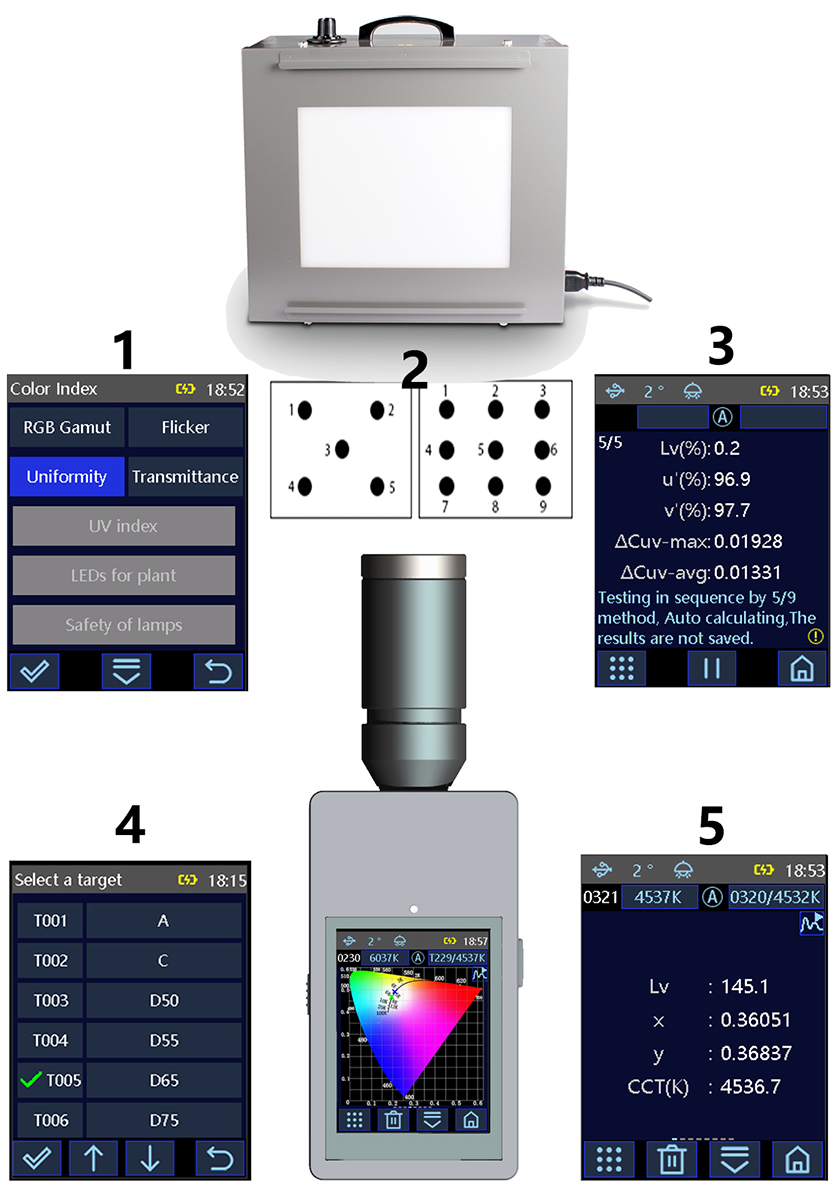
3.3 Color temperature(CCT), Color rendering index(CRI), Uniformity measurement of Light box or Display panel
The main technical indexes of the light box include the following: the standardization of the spectral distribution of the light source, the display uniformity of the illumination of the light source, the stability of the light source, the color temperature and color rendering index of the light source, and the life of the light source. The CI820 spectroradiometer can easily measure the stability, uniformity and spectral matching of the light box.
3.4 Transmittance Test
Transmittance is the ratio of the luminous flux (radiant flux) of light passing through the measured object to the incident luminous flux (radiant flux) . The transmittance of visible light is usually the ratio of the luminous flux of visible light at wavelengths of 380-780 nm, UVA transmissivity is usually the ratio of UVA to UVA radiation flux, and IR transmissivity is the ratio of IR radiation flux at wavelengths over 780 nm.
LED light source or halogen tungsten lamp is usually used as the lighting source in the transmissometer. From the test results, different lighting sources have a certain influence on the transmittance test results, usually affecting about 5% .
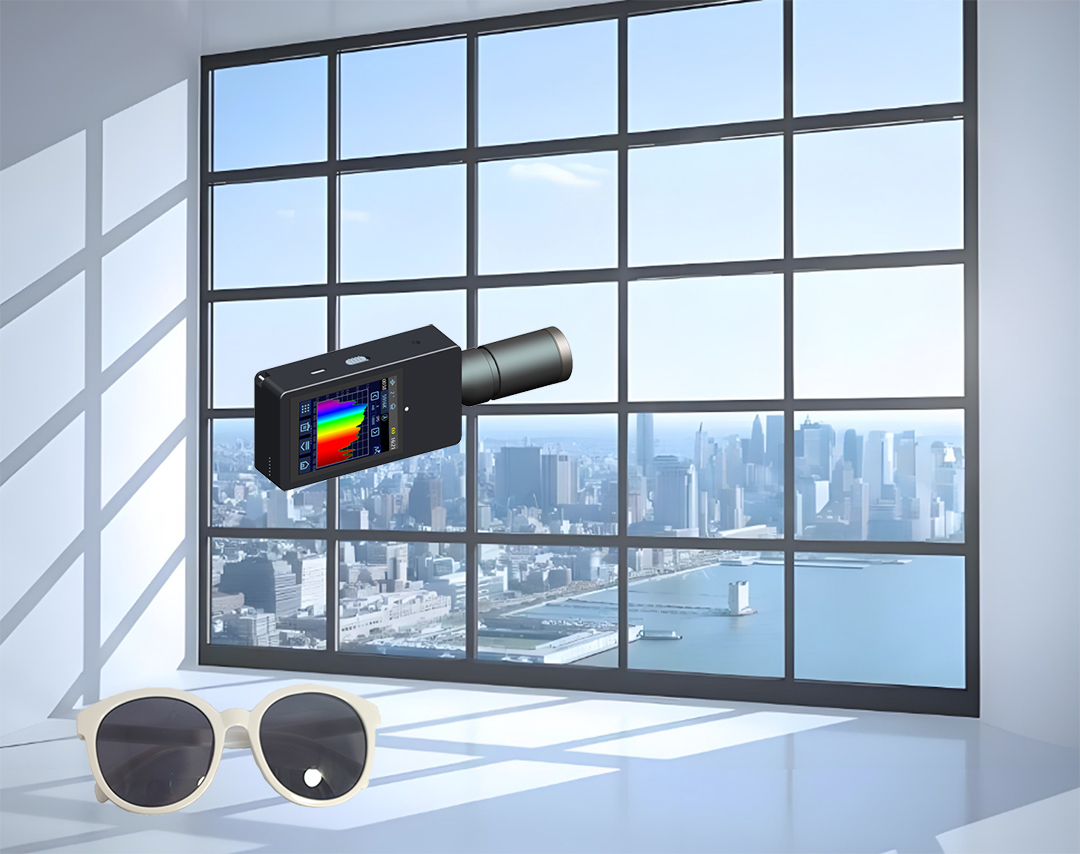
Many standards and documents clearly state that the D65 standard illuminator is the most ideal illuminator for transmissometers. The D65 standard lighting source is the Earth's average northern hemisphere solar spectrum, so the transmittance tested under this light source condition is very representative and easily accepted by the public. For example, outdoor glass, UV sunscreen glasses and other related standards clearly state that the D65 light source should be used for transmittance testing. HowLver, the light source used by the common transmittance meter is far from the D65 standard lighting source, so the test results are not very good.
CI820 spectroradiometer can use outdoor sunlight (as close as possible to the D65 standard lighting source) as the lighting source, after two tests, very convenient test glasses, architectural glass in D65 standard lighting source under the condition of transmittance.
3.5 Reflectance Test
Reflectance refers to the ratio of the reflected luminous flux (or radiant flux) of an object to the incident luminous flux (or radiant flux). Visible light reflectance is typically the ratio of luminous flux within the wavelength range of 380~780 nm. UVA ultraviolet reflectance is usually the ratio of UVA ultraviolet radiant flux, while infrared (IR) transmittance is the ratio of infrared radiant flux with wavelengths exceeding 780 nm.
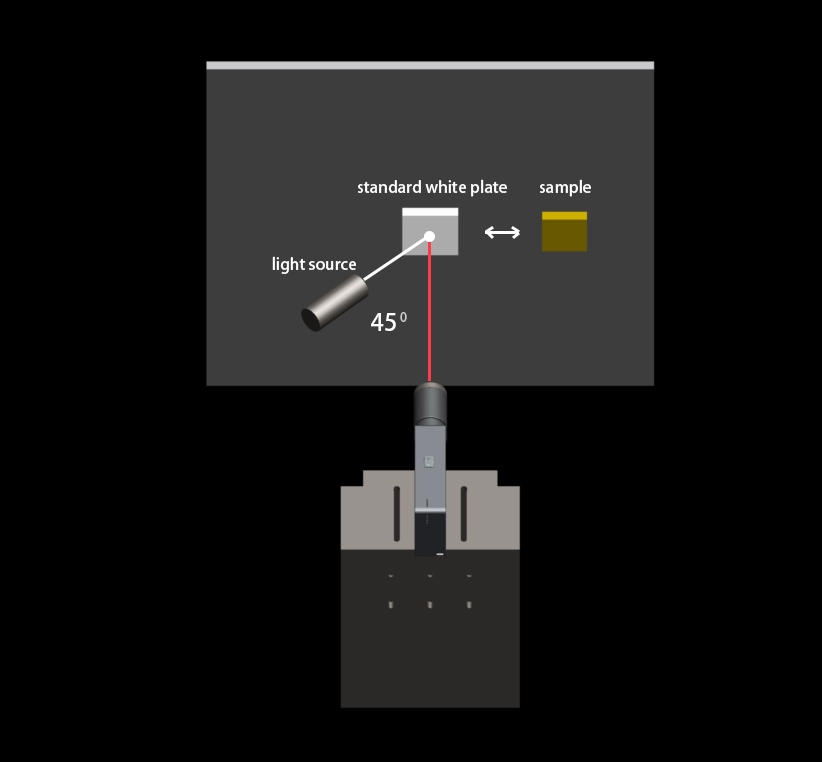
In a darkroom environment, the CI820 is fixed on a mounting fixture. A sample plate is placed at an appropriate distance directly in front of the probe, and the light source illuminates the center of the sample plate at a 45-degree angle from the normal of the sample plate. The light source can be a full-spectrum visible light source, such as a halogen tungsten lamp or a full-spectrum LED.
First, place a standard white board with a known reflectance (R_STD), and use the CI820 to measure the radiance spectrum of the standard white board, recorded as P_STD. Then, place the sample to be tested, and use the CI820 to measure the radiance spectrum of the sample, recorded as P_SAP. The reflectance of the sample can then be calculated as R = R_STD * (P_SAP / P_STD), from which the reflectance for visible light, ultraviolet, infrared, or each specific wavelength can be determined. Based on the reflectance and colorimetric knowledge, further calculations can be performed to obtain various parameters of the sample, such as tristimulus values (XYZ), chromaticity coordinates (xy), and Lab values.
3.6 LED Synchronous Measurement of Chromaticity Coordinates, Color Gamut, and Lv for LED Outdoor Advertising Screens
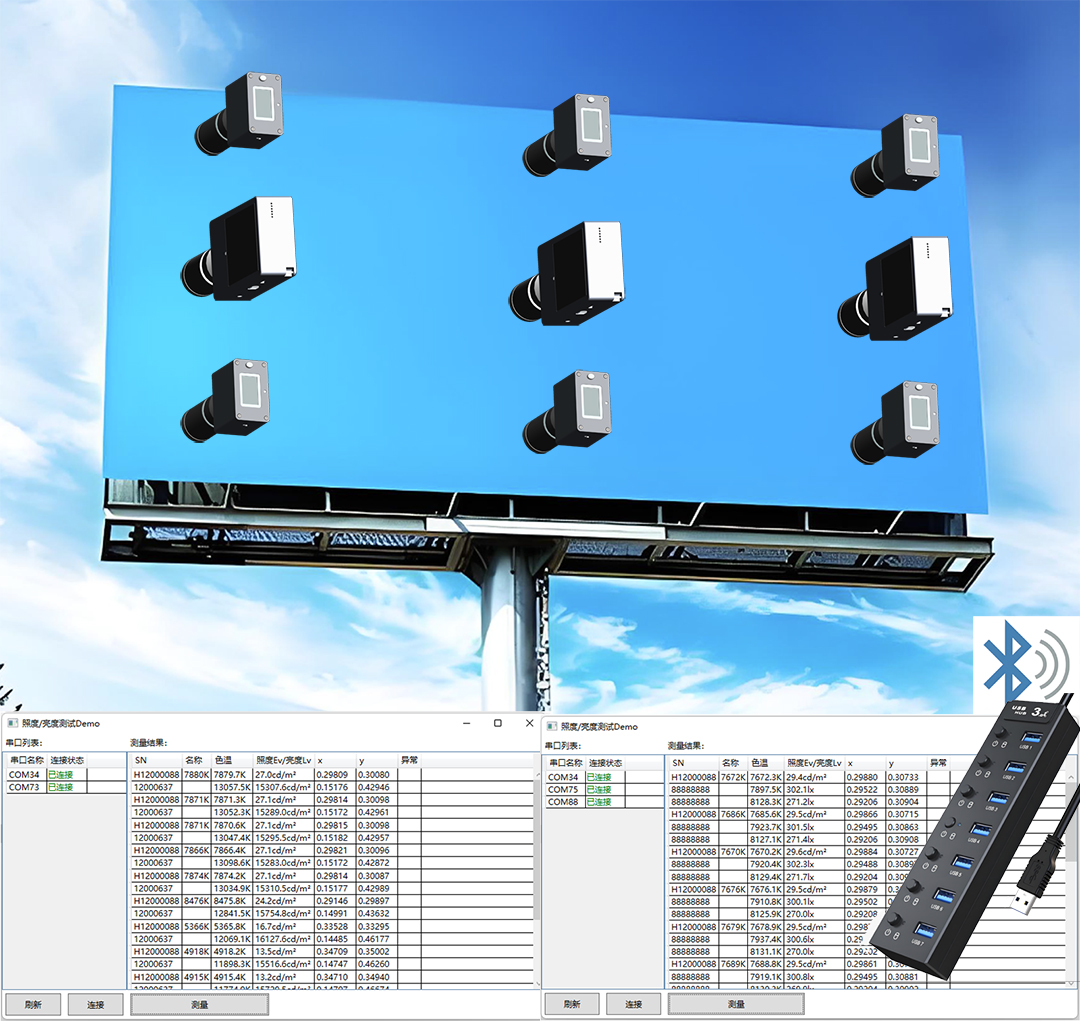
Large-sized LED displays or LCD screens are typically composed of smaller display modules. Due to differences in these small-sized display modules and their driving modules, the consistency and uniformity of the assembled large display screen may deteriorate. In such cases, it is necessary to adapt the driving circuits and color gamut mapping according to the display characteristics of different modules to ensure uniform performance of the assembled large display.
The CI820 employs a grating spectrophotometry method to measure the photometric parameters of the display screen, providing accurate test data without XYZ response matching errors.
Multiple CI820 units can be fixed at the center of each small-sized display module. The host computer uses specialized synchronous testing software to control multiple CI820 units via USB cables or Bluetooth for synchronized testing. The host computer directs the display to show different colors and controls the CI820 units to collect photometric data. Subsequently, the display parameters of each small-sized module are characterized, and individualized adaptations are performed. This ensures that the assembled large display achieves consistent and uniform performance.
IV Dimensions
V Technical Parameter